

Content marketing for small businesses is one of the most effective ways to attract customers and grow consistently. Learn how to apply these strategies to your business.
The digital landscape is becoming increasingly competitive. A study by WordPress found that more than 7 million articles are published every day.
In this environment, small businesses need strategic planning, high quality content, and the right approach to rank well on Google. According to Content Marketing Institute, 74% of consumers say online content influences their purchasing decisions.
That is why it is important to follow proven content marketing practices that help small businesses achieve stronger results.
How to use content marketing for small businesses
Content has become a core part of marketing strategies for small businesses looking to grow intelligently and sustainably. Below are the key practices that support this approach.
1. Every piece of content should have a strategy
For small businesses, every piece of content should serve a clear purpose, whether that is attracting visitors, generating leads, or strengthening relationships with customers.
Your content strategy should focus on relevant keywords aligned with your audience’s questions and interests. Combined with technical SEO, this helps search engines discover and rank your content more effectively.
With the rise of Artificial Intelligence, creating content that delivers real value and is clearly organized has become even more important. A useful article that cannot be found online will not generate meaningful results.
2. Always prioritize quality
One of the biggest advantages of content marketing for small businesses is the closer relationship with the audience. This allows businesses to better understand customer pain points, interests, and behaviors.
Instead of competing through volume alone, focus on creating the best possible content with the resources you have available. That means producing useful, well written, and search optimized content.
A strong strategy is investing in evergreen content. These timeless articles continue driving traffic over time with minimal updates.
3. Maintain a publishing schedule

Strategic planning for small businesses should include an editorial calendar to organize ideas, distribute topics over time, and maintain a realistic publishing frequency without sacrificing quality.
Tools such as Trello and Notion can help organize and track content production.
Even a simple content calendar should include:
- Target audience
- Priority topics
- Content formats and types
- Distribution and promotion channels
- Realistic publishing frequency
4. Include clear and contextual calls to action
Content without a call to action is a missed opportunity. An effective CTA guides readers toward the next step, whether that is downloading a resource, requesting a quote, or subscribing to a newsletter.
When properly integrated into digital marketing for small businesses, CTAs become the bridge between interest and conversion.
A report from HubSpot found that personalized CTAs based on user behavior and profiles can increase conversion rates by up to 202%.
For example, a natural products store could invite blog readers to download an ebook with healthy recipes.
5. Diversify your content formats and improve readability
When discussing content marketing for small businesses, many people immediately think of written blog posts.
However, it is important to explore formats that engage different audience profiles, including:
- Short videos
- Social media carousels
- Infographics
- Email campaigns
- Ebooks
- Checklists
Using multiple formats expands your reach and strengthens engagement, especially on social media platforms.
Content should also be visually appealing. Reading should feel smooth and easy, with:
- Clear headings
- Short paragraphs
- Good formatting
- Visual elements that improve understanding
The easier content is to consume, the better the audience retention and SEO performance.
6. Build genuine connections through real stories
Marketing for small businesses should take advantage of the closer relationship with customers to create more authentic communication.
Sharing real stories about behind the scenes experiences, challenges, or customer success stories helps build emotional connections and strengthen loyalty.
Storytelling and case studies are powerful ways to demonstrate authority while showing the human side behind the brand.
7. Promote and distribute your content
Publishing content is only the first step. To generate results, small business marketing needs to focus on the right distribution channels.
The good news is that effective promotion does not always require a large advertising budget.
Platforms such as:
- Blogs
- Email marketing
- Messaging apps
can all generate strong organic reach. Participating in communities, groups, and optimizing your Google Business Profile can also increase visibility.
The key is distributing content where your audience already spends time.
8. Automate wherever possible
With smaller teams, automation is one of the smartest ways to save time and maintain consistency in content creation and promotion.
Useful automations include:
- Scheduling social media posts
- Planning blog publications in advance
- Creating automated email workflows
Tools such as Buffer, Mlabs, and Hootsuite help manage content publishing more efficiently.
Meanwhile, platforms like MailerLite, RD Station, and Brevo allow businesses to create personalized marketing campaigns.
Automation does not replace strategy, but it makes execution more scalable and practical.
How we help small business portals gain visibility
We help small business portals increase visibility through technical SEO, search intent focused content, and smart distribution strategies.
After all, content marketing for small businesses is at the core of what we do.
Strategic keyword research focused on SMEs
We use SEO tools such as Ahrefs and Semrush, along with other advanced platforms, to analyze the client’s website, niche, and competitors before creating a list of valuable keywords.
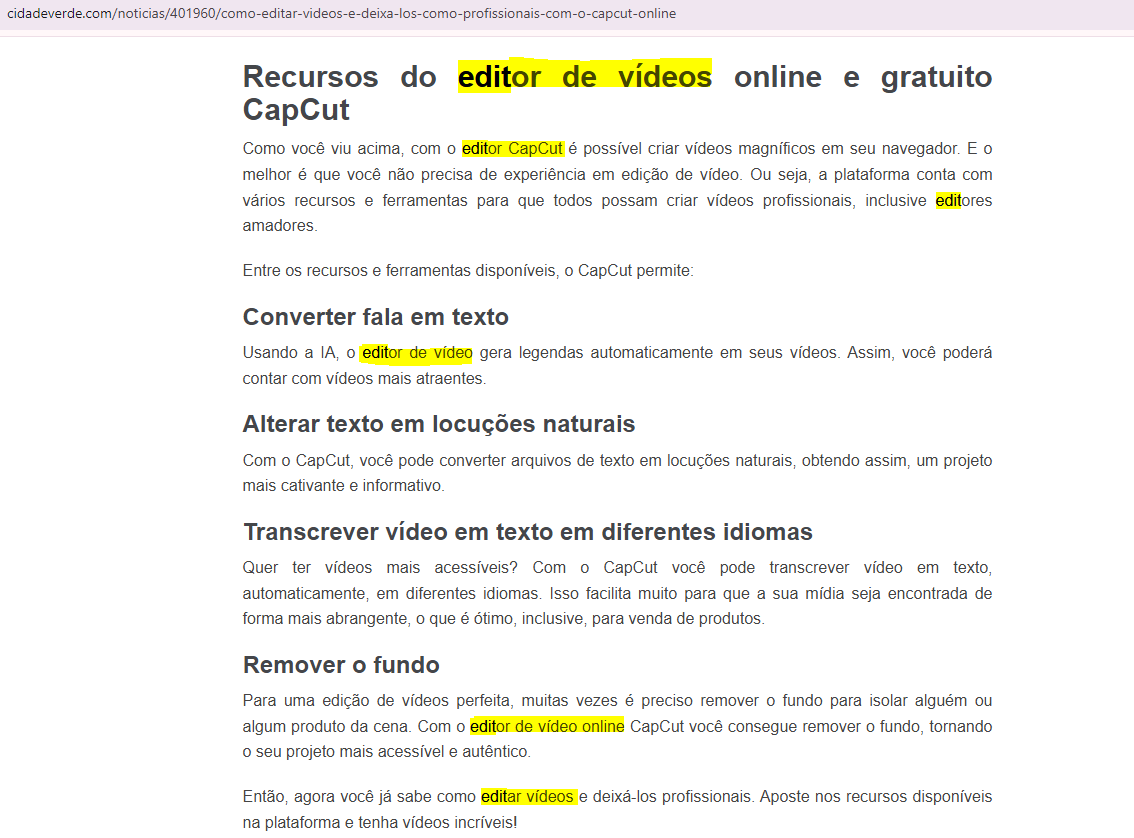
When working with the CapCut portal, one of the strategies involved link building campaigns. Since keywords related to the brand included terms such as “video editor,” “edit videos,” and “online video editor,” we integrated them naturally throughout the content.
Although the brand itself is not a small business, this example demonstrates how we improve rankings in search engines.
Creating optimized and human centered content
Besides making content visually attractive and easy to read, optimized structures also help search engines rank pages more effectively.
Below is an example of a content guide structure.
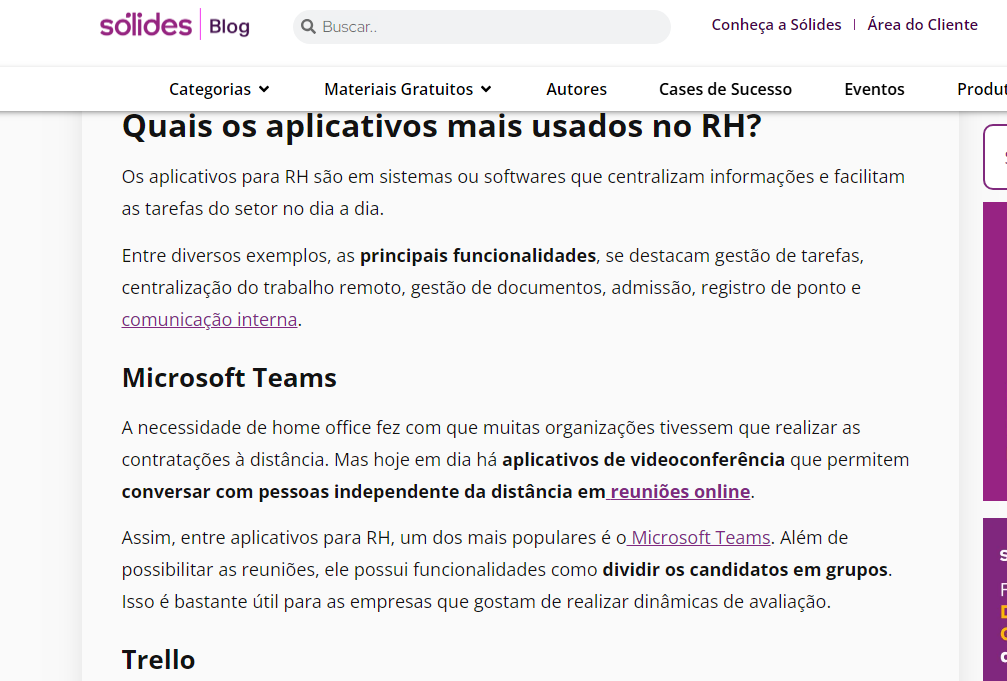
This content was produced by our team as part of a link building strategy for Microsoft Teams. Notice how relevant keywords and natural brand mentions were strategically integrated into the content. These are all important content marketing practices for small businesses.
Want to get Brazilian backlinks for SEO? Get in touch!
Structuring content for SEO and AI readability
Using semantic structure is essential. This includes:
- H2 and H3 headings
- Bullet points
- Numbered lists
- Images
- Videos
- Tables
This structure improves both user experience and readability for search engines and AI systems.
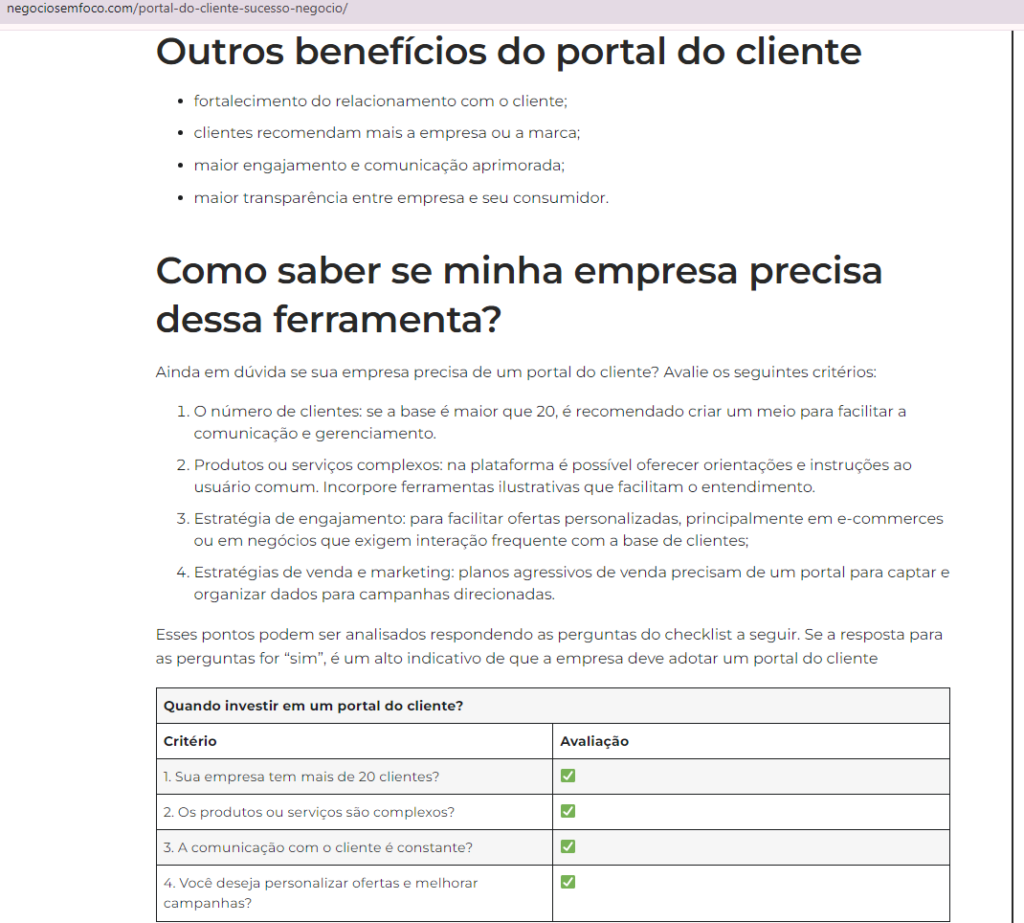
Even from a quick glance, it is clear that well structured content attracts readers more effectively. Strong formatting also improves rankings against competitors in search results.
When properly spaced and naturally inserted, internal links help increase user engagement and time spent on the website.
Internal links also enrich the reader’s experience by providing additional relevant information related to the topic.
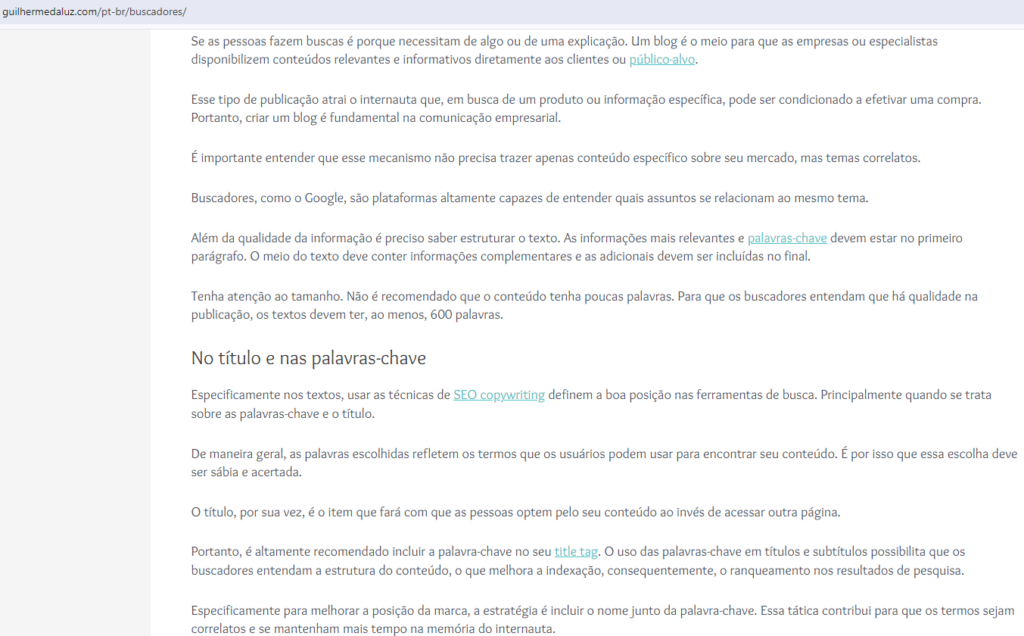
However, links should always be added naturally to avoid over optimization issues with Google.
Performance analysis and continuous optimization
After implementing these strategies, performance tracking becomes essential.
Using SEO tools, businesses can evaluate whether their strategies are delivering the expected results.
Important platforms include:
- Google Search Console
- Google Analytics
- Semrush
- Ahrefs
- Moz
Image: Google Analytics
It is important to compare results across multiple tools to gain broader insights into performance, identify necessary improvements, and analyze how competitors are achieving better rankings.
Now that you know the best content marketing practices for small businesses, it is time to put them into action.
If you need SEO specialists to help grow your business online, contact our team.