

Will the routine of SEO professionals change with Gemini, Google’s new AI? Find out how to keep your portal ranking well in search results.
What should SEO professionals pay attention to with Gemini AI, since, according to Google, it is more powerful than ChatGPT? The new AI model will be a turning point in SEO and search strategies.
After all, it features unlimited capabilities and enhanced multimodality, being the first model to surpass human experts in Massive Multitask Language Understanding (MMLU), as reported by Search Engine Journal. In addition, according to Google spokespersons, it can perform many tasks and can be used in the browser version, integrated into the Google app on iOS, and in the Gemini app for Android.
But what should SEO professionals be concerned about?
Images will have greater traffic potential
What stands out most with the incorporation of Google’s Artificial Intelligence, Gemini, is the fact that queries will become even more multimodal. From an SEO perspective, this change aims to boost image optimization, as images will generate more traffic.
However, it is still essential to pay attention to content production, considering that naturally written content will continue to be a strong trend. Below are some tips to ensure your page continues to rank on Google:
For content
The first paragraphs are the most important when adapting to the changes brought by Gemini, Google’s AI. It is important to work on the first three paragraphs in a way that “speaks to humans,” directly addressing the topic of the content.
Of course, keywords should be included at the beginning, but without forcing them, keeping the text as natural as possible. This way, Google will find well-written content that answers the reader’s questions early on, communicating in a humanized manner.
For images
As we have seen, having well-described images will be essential for Gemini AI. Therefore, it is crucial to already consider image optimization strategies with the introduction of Google’s AI, Gemini. Our team already follows these practices. Below are the main priorities we apply to images used in published content:
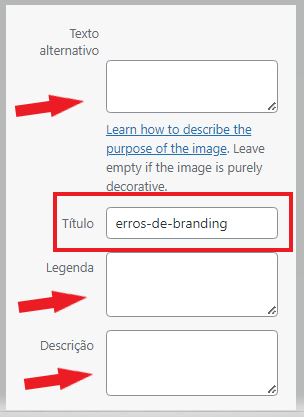
1. Include the main keyword when saving the image
Save images using correct, short terms that include the main keyword, for example:
“seo-content-optimization”.
Through the alt tag (alt tags, alt text, or alt descriptions), Google reads the image. Therefore, include appropriate keywords and describe the image according to the section of the content where it is inserted.
3. Create a caption
Captions help users understand what the image is about. By adding a caption, you can highlight the most important characteristics that lead users to engage with your content.
After all, captions help both the algorithm and the user understand the image. They are a powerful tool to capture the reader’s attention and contribute to making your portal stand out, including meeting the requirements of Gemini AI.
4. Pay attention to file size
You can use tools such as TinyPNG to reduce file size. The most recommended size is under 100 KB. Remember that it is ideal to use filters on the platform where you download the image, selecting the most suitable size for your page without needing further adjustments.
Another option is to use a plugin that automatically formats images correctly when publishing content.
5. Maintain image quality
Uploading heavy files affects your page’s loading speed. Therefore, compress images before uploading them. There are several free and paid tools available to compress images and make files lighter.
Many of these tools do not compromise image quality, which is beneficial in terms of Google’s new AI.
6. Focus on image context (do not place images randomly in the text)
Do you want your images to rank? One of Google’s image search ranking factors is the context in which the image is placed. The information you provide for the image is essential, as the search engine analyzes whether the paragraph where the image is inserted is related to it.
In other words, the paragraph must discuss the same topic as the image. To increase the relevance of an image of a car, for example, it should be placed in a paragraph that talks about cars. Therefore, images must be contextual and coherent.
See how we do it:
 The image above was inserted in the section of the content where we discuss “marketplaces” and “website creation.” The image shows a woman with a laptop, who could be selling her products or creating her website.
7. Take care of image dimensions
In general, image dimensions should match the position where they will be displayed, including meeting the requirements of Gemini AI. Since Google Images offers size filters, you can choose according to your posting needs. Options range from small, medium, large, icon, to “larger,” which includes dimensions from 400 x 300 up to 2272 x 1704.
Follow the tips above to continue highlighting your page in search results with Gemini, Google’s AI. The more interactions images receive, the better the positions achieved in Google Images. After all, Google detects clicks and other interactions, understanding that these images are more relevant to users.
Take advantage of this by investing in designs that attract users, as images often lead them to your page. Remember that images also generate traffic to blog content, since users frequently click through from Google Images to view the full article.
Finally, remember that you can rely on an SEO agency specialized in content optimization, including image optimization. Get in touch with our SEO specialists and discover how we can help your page rank after the introduction of Google’s new Artificial Intelligence.