

Most searches today result in zero clicks. Yet brands still focus only on Google rankings. Here is how to avoid this strategic mistake in the AI era.
A few years ago, succeeding online meant ranking well on SERPs. Today, that reality has completely changed, driven largely by the rapid expansion of Artificial Intelligence.
Chat tools powered by natural language, such as ChatGPT and Gemini, are now acting as primary answer engines. These platforms synthesize information from multiple sources and deliver ready to use responses.
According to Similarweb data, when AI generated summaries appear in results, zero click rates can reach up to 80 percent. This shift has redefined how brands, businesses, and creators interact with search engines.
Unlike the past, when ranking on Google directly translated into success, today the real goal is to become part of the answer itself. That means deeply rethinking and restructuring SEO strategies.
Learn how to update your approach and prepare for a future with fewer clicks and more direct answers.
What visibility looks like in the zero click era
In the traditional model, visibility meant clicks. Ranking on the first page of Google, especially within the top three results, guaranteed traffic.
Now, with direct answers displayed in search results, clicks are no longer required. On mobile devices, for example, a study by Up and Social shows that up to 77 percent of searches end without a single click.
The ecommerce sector is also experiencing significant shifts in user behavior due to zero click searches.
Visibility is no longer about how many users visit your site, but how many people see or receive your information. Your website is no longer just a destination. It becomes a data source, a reference point, and a content provider.
Answer blocks citations and brand presence
To generate responses, AI systems rely on multiple signals to determine which sources to use. The most important factors include:
The more your brand is mentioned across websites, blogs, forums, and communities, the more likely AI will recognize it as a trusted source.
Well structured and readable content
Content organized with headings, subheadings, questions and answers, lists, and summaries is easier for AI to process.
External validation and citations
High quality backlinks, references, and mentions from reputable sources continue to strengthen credibility.
Success metrics are no longer based on clicks
With this new paradigm, traditional metrics are losing strategic relevance. In practice, a brand may see a drop in organic traffic while gaining more mentions across social media, forums, and AI generated responses.
This indicates that content is being used as a reference, even without driving direct visits.
In the zero click era, more subtle and meaningful indicators become critical:
- Engagement and time spent
If users interact with content by reading, sharing, or commenting, even within AI platforms or social media, it signals depth and relevance.
- Mentions and citations
How often your brand or content is referenced across websites, forums, or AI responses.
- Perceived authority and digital reputation
How present your brand is in relevant conversations within your niche.
These metrics reflect the true value of your brand in terms of recognition, influence, and decision stage visibility.
In practice how to optimize SEO for AI
Image by Glenn Carstens Peters on Unsplash
The shift from ranking driven SEO to a zero click environment requires a fundamental change in content structure.
Even without focusing purely on rankings, SEO remains essential for positioning your content as a reliable source for AI systems. Key strategies include:
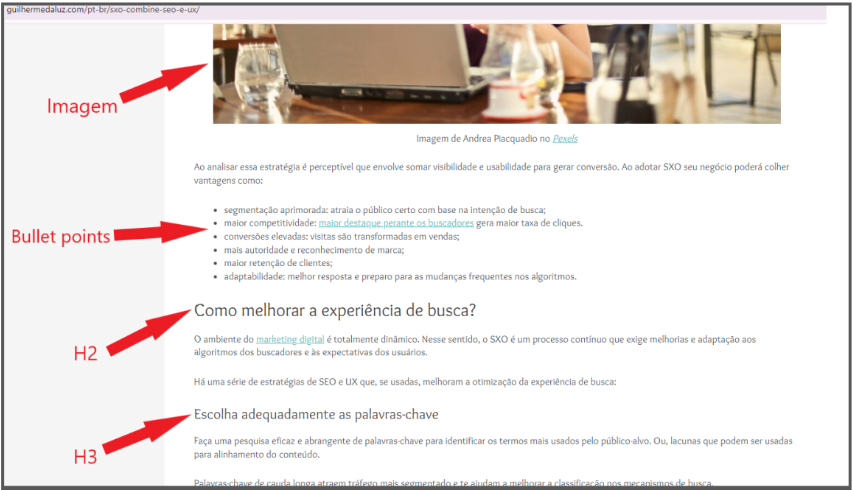
1. Structured content for humans and machines
Readability remains a core optimization factor. Content must now be both human friendly and easily interpreted by AI.
For example, a well structured guide with clear headings, lists, and Q and A sections is more likely to be understood and cited than long unstructured text.
Here is a strong example of how we structure content:
Whether in traditional search or zero click environments, high value content remains the foundation of success.
Focus on creating content worth referencing by offering deep analysis, original data, informed opinions, comparisons, and unique insights.
It is also important to build visibility beyond your own domain. Guest posts, mentions in blogs, third party articles, forums, communities, and social media all contribute.
The more contexts your brand appears in, the higher the probability that AI systems will identify it as a trusted source.
User generated content also plays a key role. Reviews, testimonials, and comments strengthen credibility and expand your presence across external platforms. Actively participate in discussions and relevant communities.
3. Expand beyond basic optimization
Traditional SEO elements such as keywords, backlinks, technical structure, speed, and user experience still matter.
However, the goal is no longer just to rank at the top, but to become a trusted source for AI generated answers.
Classic SEO must now be combined with optimization for generative engines, known as GEO, Generative Engine Optimization.
4. Track new performance metrics
In addition to traditional metrics like traffic, bounce rate, and CTR, it is essential to monitor:
- Brand mentions and their context
- How often your content is cited across platforms
- How your brand appears in forums, reviews, and social channels
- Growth in branded searches
- Indirect conversions driven by AI references
These insights will shape future strategies in a constantly evolving digital landscape.
A website that ranks first but is not included in AI generated answers loses strategic relevance. On the other hand, becoming a trusted source leads to mentions, citations, and recognition.
In the zero click era, visibility is no longer measured by traffic, but by presence. If you create content, your next step is not just ranking higher, but becoming indispensable as a source.
Write for your audience without losing SEO
In SEO, writing for your audience means aligning content with search intent and real user language. When this does not happen, content may rank but fails to engage, convert, or build authority.
That is why it is essential to write for your audience without sacrificing SEO. Here is how we approach it:
1. Start with search intent not keywords
Before writing, identify what the user expects to find.
Example:
- Keyword: blog content
- Possible intents:
- Beginner how to create blog content
- Intermediate blog content strategy
- Advanced blog content that converts
Each intent requires a different structure, depth, and approach. Trying to cover all in one article often leads to poor performance.
2. Use real user language
Modern SEO favors content that reflects natural search behavior.
Instead of writing: omnichannel strategies to enhance digital assets, use: how to use multiple channels to attract more customers to your website
The second option connects better and often performs stronger in long tail searches.
3. Answer the main question quickly
Google tracks user behavior. If users do not find what they need, they leave.
Best practices:
- Answer the main question early
- Use H2 and H3 based on real queries
- Avoid long and generic introductions
Here is how we do it:
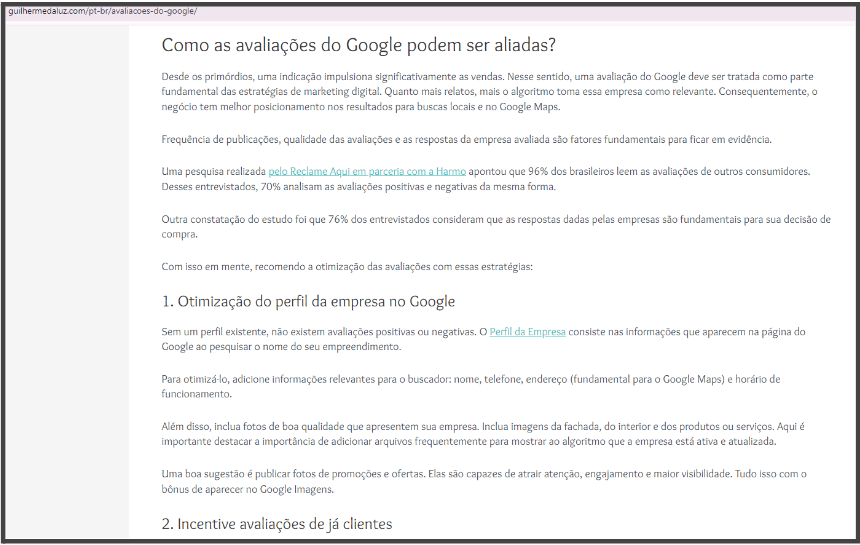
The answer appears immediately after the question, so users do not need to scroll endlessly. We also use H3 sections with practical tips.
Example:
If the title is write for your audience, the introduction should clarify:
- Who the audience is
- Why it matters for SEO
- How to apply it
4. Use real world examples
Generic content loses relevance and reduces engagement.
Example:
- For a digital marketing audience:
An SEO agency working with ecommerce focuses on categories, comparisons, and purchase intent. For B2B, the focus shifts to education, authority, and decision making.
This helps both search engines and users understand context and application, increasing zero click visibility.
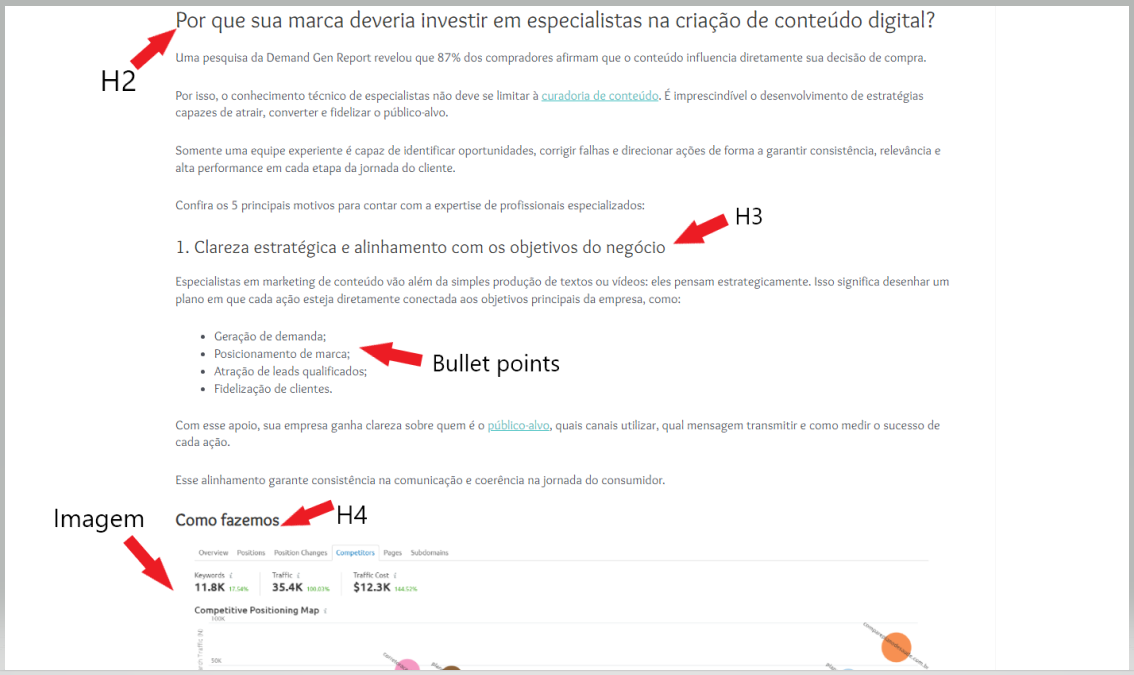
5. Structure content for readability
SEO is not just about text, it is about experience. Focus on:
- Short paragraphs
- Clear lists
- Descriptive headings
- Internal links to related content
A well structured article increases time on page, reduces bounce rate, and improves conversion signals.
Here is how we do it:
6. Review with utility and search in mind
Before publishing, validate:
- Does this content outperform competitors
- Does it match a clear intent
- Does it use real search language
Sustainable SEO happens when content is useful for people and readable for search engines.
Writing for your audience is one of the most strategic decisions in SEO. When intent, language, and structure align, content naturally gains visibility, engagement, and rankings.
Now you know how to achieve and benefit from zero click visibility. Need help?