

In content marketing, deep content is one of the most powerful strategies for building authority, relevance, and long-term positioning. Learn more about this topic.
With a differentiated approach, deep content addresses specific topics with rich, comprehensive, and useful analysis for the target audience.
Concerns about shallow and superficial content began with the uncontrolled use of Artificial Intelligence for text production.
Because it is produced quickly and meets high demand, AI-generated material lacks depth or a human touch, which has led search engines to begin penalizing pages that use this resource excessively.
Of course, technology is always very welcome. Therefore, understand how to balance quality and quantity in deep content.
The difference between Deep Content and AI-generated productions
Deep content refers to high-quality, evergreen material that is truly valuable to readers. It is commonly written by humans who research and apply critical thinking when presenting information on a given topic.
When it comes to Artificial Intelligence for SEO, deep content emphasizes the importance of expertise, experience, authority, and trustworthiness, in line with Google’s E-E-A-T guidelines.
The need to create more in-depth and specific content comes from common shortcomings and limitations of AI, especially:
- The lack of algorithm updates and AI training can generate inaccurate content;
- There is no personal touch, emotional depth, or connection with readers;
- AI-generated content does not adopt cultural references, humor, or emotional connotations. It tends to be repetitive and shallow, without personalization to establish a strong brand;
- Even when optimized for content, it has lower engagement. In addition, search engines prioritize user experience and therefore tend to disapprove materials that were not written by humans.
Does this mean you cannot use AI at any point? Calm down, that is not the case. There is a balance that can be achieved in the production of deep content.
Moderation between quantity and quality in deep content
In times of high content production, some believe that quantity outweighs quality for generating organic traffic to a website. Of course, delivering new content is a differentiator, but without quality, this strategy falls apart.
Shallow content may even attract visitors at first, but it will not be able to convert effectively.
In this scenario, AI should be seen as a production partner, increasing the efficiency of human writers.
When we talk about balance, it lies in the appropriate use of technology, such as checking grammar, spelling, style, and clarity of the produced material.
Because they are data-oriented, solutions can be used to research profitable keywords, suggest topics, and assist in content production.
The use of AI has been changing search behavior, leaving it up to brands to use mechanisms to create relevant content. When useful, the text can be mentioned in Google’s AI Overviews, providing an opportunity to increase organic click-through rates from 0.74% to 1.02%.
The key point is not letting technology dictate the production process. Learn how to use AI as an ally in content creation.
Building quality content with AI
To create deep content with the support of Artificial Intelligence, it is recommended to:
Audit the content
Search engines, such as Google, care much more about quality than quantity. Therefore, instead of generating content with AI and simply publishing it, perform an SEO audit on the text generated by the technology.
In this action, be meticulous about what can be improved to align with the search engine’s evaluation guidelines.
Focus mainly on maintaining the content in your brand’s voice, while also including ways to increase engagement and conversion rates.
The idea is to use human reasoning to fill gaps left by AI.
Create connection and emotional appeal
Connection with the audience needs to be genuine. Create a more personal narrative and deepen emotional appeal. Here, it is possible to incorporate customer testimonials or success stories around products or services. Remember that emotions shape consumer behavior.
For greater identification with readers, add a human touch to the writing, use analogies, technical quotes, foreshadowing, and even a touch of humor. AI-generated content is robotic and static, factors that do not create connection.
Deepen the research
AI-generated content, no matter how specific the command prompt is, is not personalized or deeply developed. Therefore, it is necessary to conduct thorough research on the topic being addressed to develop and present unique opinions and angles.
For deep content to perform better, develop it based on data. In addition, include reports on the topics most searched for by your target audience.
Furthermore, a text that includes citations from experts or well-known figures in the market ensures greater credibility and authority for the material.
Plan content for different stages
Build deep content for each stage of the consumer journey. AI-generated content, because it is generic, is suitable for the top of the funnel.
Middle- and bottom-of-funnel materials require a higher level of depth, knowledge, and personalization, something AI cannot provide.
It is clear that the balance between quality and quantity in deep content is a strategic issue. Research topics that are important to your audience and create in-depth and relevant publications.
How about starting right now?
What we consider when creating in-depth content – deep content
It is not enough to have a massive text that adds nothing to your target audience. It is necessary to offer quality content, and that is what our team values. However, to address topics and use relevant information, good topic planning is required. See how we do it.
Topic planning
The content marketing team uses well-known portals in the client’s niche as a reference. In the case of guest posts, we also consider the portal that will publish the content. In other words, we seek to create titles and address topics that serve both portals.
For content development, we focus on subtitles that add value to the portal’s users, always centered on the main topic. This way, we have well-crafted H2 and H3 headings and send the briefing to the writers.
In addition, we rely on SEO tools that provide important information for topic development. Among them are Semrush, Ahrefs, and GSC, which offer much more than just a list of keywords.
Content creation

We require writers to follow the briefing and create a pleasant reading experience for the audience, always respecting the style of the portal that will publish the content. In addition, we do not accept content developed by AI or that addresses information that adds no value.
Our focus is on content that generates knowledge and aims to answer questions, serving exactly the target audience, deep content. In the case of link building, the content also needs to be well developed to naturally fit the client’s backlink.
Overall, the text must provide complete information that truly contributes to the reader, being in-depth content. In addition, it must include reliable sources, research, and surveys that complement the reading.
And more: we place strong emphasis on structure, which must provide a pleasant reading experience, allowing readers to find what they need quickly.
Results analysis
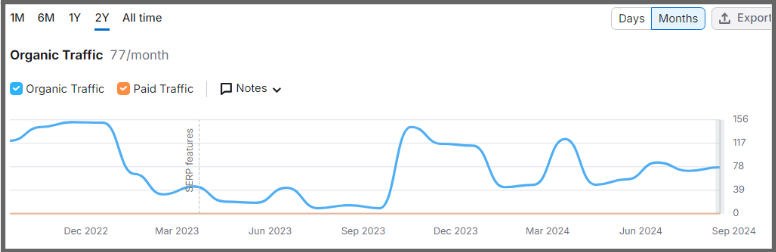
We also observe which strategies worked and which need to be replaced or improved. For this, we rely on essential SEO tools such as Semrush, GSC, Ahrefs, and Analytics.
In addition, we compare how the client’s portal performed previously with current data to make comparisons. At this stage, we also consider competitor analysis to observe how much progress has been made. After all, it is not enough to invest in good content, it is necessary to ensure expressive results.
Thus, by following all stages of content creation and results analysis, you will be able to achieve strong outcomes. After all, with each analysis, it is possible to further refine topic planning, building deep content. This way, you deliver quality to what your readers find on your portal.
Now you know how to balance quality and quantity in deep content. Put the tips above into practice and observe the results. And if you need content marketing specialists, get in touch.