

Want your content to generate real results instead of just being found by search engines? Then you need to understand SXO, the combination of SEO and UX.
Search Experience Optimization (SXO) aligns two key areas of digital marketing: techniques to achieve good search rankings and practices to enhance user experience within the website.
This strategic shift doesn’t just focus on attracting clicks — it improves everything that happens after users arrive on the site. In other words, it orchestrates an optimized journey designed to significantly increase conversion rates.
Think about your own shopping experience: when searching for new sneakers, would you rather buy from a site with friendly navigation and responsive design, or from a slow platform where it’s nearly impossible to read product information due to poor layout?
The answer is obvious! That’s why you need to understand how SXO works and how to apply this integrated approach to optimize content your blog or website.
Why invest in SXO?
SXO is considered the future of digital optimization because it combines SEO visibility with the usability provided by UX.
Search Experience Optimization enhances a more reliable, faster, and efficient user experience. This combination helps websites achieve top search engine rankings while keeping visitors engaged longer.
Returning to the sneaker example — SEO can be used to optimize product pages with proper titles and meta descriptions, improving visibility. UX, on the other hand, keeps users on the site and encourages purchases through easy navigation, responsive design, and a seamless checkout process.
A study by Forrester, a U.S. research and consulting firm, found that improving user interface design can increase conversions by up to 200%, while excellent UX design can boost conversion rates by up to 400%.
Indeed, SXO optimizes the entire user journey — from the initial search click to navigation and conversion. As a result, visitors become more satisfied, turn into loyal customers, and recommend the website to others.
Benefits of SXO
SXO combines SEO and UX principles to boost conversions

Analyzing this strategy makes it clear: it combines visibility and usability to drive conversions. By adopting SXO, your business can gain advantages such as:
- Enhanced targeting: attract the right audience based on search intent.
- Greater competitiveness: better search rankings mean higher click-through rates.
- Higher conversions: turn visits into actual sales.
- Increased brand authority and recognition.
- Improved customer retention.
- Adaptability: better readiness for frequent algorithm changes.
How to improve search experience
The digital marketing environment is constantly evolving. Therefore, SXO is a continuous process that requires ongoing improvements and adaptation to both search engine algorithms and user expectations.
There are several SEO and UX strategies that can help improve search experience optimization:
Choose Keywords Wisely
Conduct thorough keyword research to identify the most commonly used terms by your target audience — or gaps that can be leveraged for content alignment.
Long-tail keywords attract more segmented traffic and help improve search engine rankings.
Keywords should be regularly updated and adjusted to keep your site aligned with trends and recent searches.
Improve Website Speed and Performance
Fast-loading pages mean less waiting time for customers and, consequently, more sales.
An article published by Fast Company cites an Amazon report estimating that a one-second delay in page load time could cost the company $1.6 billion in annual sales.
Run tests to measure load performance, interactivity, and page stability. Adopt HTTP/3 for faster data transmission and reduced latency. Also, invest in image optimization by reducing file size and compression.
Adapt to Mobile-First
Search Experience Optimization
One of Google’s biggest updates was the prioritization of mobile-first indexing. Therefore, your website must be responsive on mobile devices.
Adopt a responsive design that adapts to different screen sizes, with simple and concise URLs. Likewise, reduce intrusive pop-ups, adjust images and videos, and ensure CTA buttons are properly positioned.
Additionally, run usability tests to evaluate whether your content displays correctly and navigation is seamless.
Content Should Be User-Centered
In the digital environment, content is key. Always invest in useful and relevant publications.
Your content strategy should use anchor text rich in keywords. To drive more organic visits, create unique and descriptive titles and tags.
The language must remain natural and accessible. Similarly, adding visual elements enriches the content. Use schema markup to provide search engines with context about your website.
You can also use your existing content to add internal links, guiding visitors to related materials. This action keeps users on your site longer, reduces bounce rates, and improves rankings.
So, can you see how combining SEO and UX through SXO is a strategic necessity to generate better results?
Start applying these strategies now and watch simple visits turn into sales.
How we combine SEO and UX principles to help portals increase conversions
We work with several clients, including Microsoft, Wondershare, Babbel, CapCut, and others. Each content strategy is carefully planned by our team — not only focusing on SEO techniques but also ensuring the best user experience for readers.
Here’s how we combine SEO and UX principles that have brought excellent results for different brands:
Clear and scannable content structure
We always aim to deliver reader-friendly content — clear, objective, and visually appealing. For this, we use H1, H2, H3, bullet points, and other formatting tools:
- SEO: Properly using H1, H2, and H3 tags helps search engines understand content.
- UX: Users read in an “F-pattern,” scanning headings and lists.
Best Practices:
- Divide content with informative subheadings.
- Use lists, bold text, and short paragraphs.
- Include a clickable table of contents.
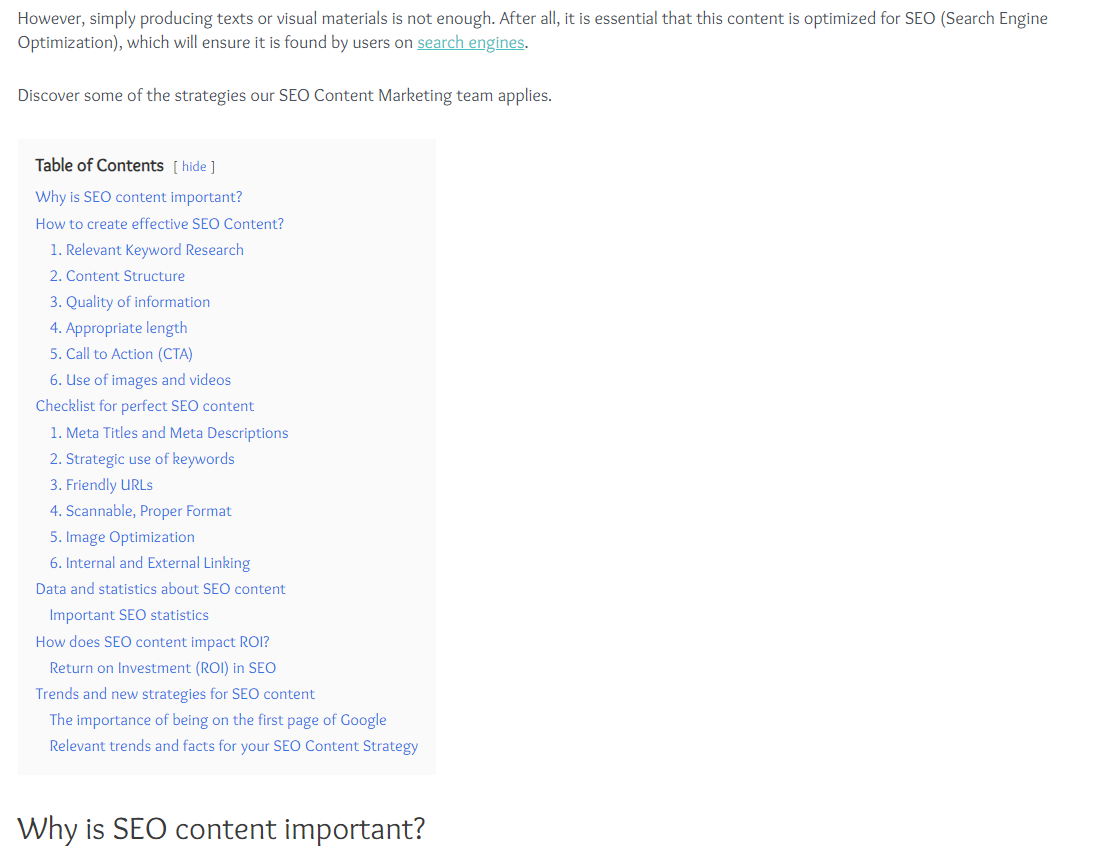
See how the table of contents is well structured and clickable, allowing readers to jump straight to the section they’re most interested in.
Search Intent and User Journey
- SEO: Aligning content with search intent improves ranking.
- UX: Providing exactly what users want increases engagement and conversion.
Best Practices:
- Research keywords based on intent (informational, transactional, etc.).
- Offer contextual CTAs — e.g., an e-book for top-of-funnel visitors, or a product offer for bottom-of-funnel users.
Example:
E-books – SEO Content Strategy

This e-book was developed by our team. The goal, beyond delivering complete content for readers, was to generate leads — and it worked, achieving high click rates within just one month.
- SEO: Internal links help with indexing and distribute authority.
- UX: Users quickly find what they need.
Best Practices:
- Create clear, hierarchical menus.
- Use descriptive internal links (e.g., “See also: How to Write Effective Titles”).
- Add an efficient internal search bar with auto-suggestions.
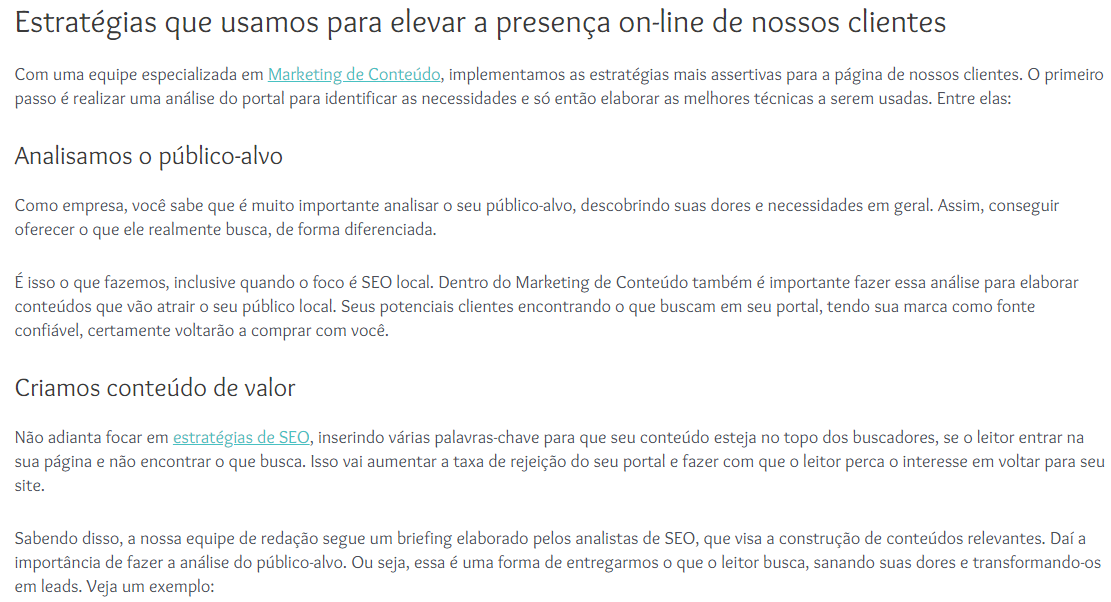
This shows the importance of inserting links naturally — enriching the reader’s experience, extending time on page, reducing bounce rate, and improving your site’s online reputation.
Rich Content and Optimized Multimedia
- SEO: Optimized images with alt text help improve rankings.
- UX: Videos, infographics, and images enhance understanding and engagement.
Best Practices:
- Use lightweight images with relevant alt text.
- Embed videos to explain content.
Create audio or PDF versions for different user preferences.
High-quality visual elements

The infographic above delivers information in a more dynamic and engaging way, making the content easier to understand and more enjoyable to read.
As you can see, visual resources enrich the reader’s experience, clarify information, and keep attention longer — increasing time on site and user retention.
Visible and Relevant CTAs
- SEO: Can influence click-through rate (CTR) and time on page.
- UX: Guide users toward the next action.
Best Practices:
- Use buttons with contrasting but harmonious colors.
- Place CTAs strategically after high-value sections.
- Perform A/B testing to optimize button text, color, and placement.
Friendly URLs
- SEO: Clear URLs with keywords are valued by Google.
- UX: Simple URLs build trust and are more clickable.
Best Practices:
- Avoid complex parameters, use /blog/seo-for-beginners instead of /blog?id=123&cat=seo.
- Include the main keyword in the slug.
If you need experts to handle SEO content optimization for your website — making it attractive for both readers and search engines — count on our team.
We have professionals specialized in Content Marketing, from copywriters to SEO managers. Contact us and see how we can help your page rank higher on search engines.