

Optimization for Generative Experiences is the guarantee that your content stands out amid changes in search engines. Learn how to adapt strategies in the era of AI-generated answers.
The way we search for and find information online is undergoing a silent but profound transformation. We have moved from the era of links that lead to a page to the era of generated answers.
Tools such as ChatGPT, Gemini, and Copilot are becoming popular and being incorporated into users’ daily lives. Today, instead of browsing countless pages, the user receives the correct answer in seconds.
According to a SimilarWeb survey, after Google launched AI Overviews, the click-through rate on traditional results dropped from 7.3% to 2.6%.
To face challenges related to visibility, authority, and conversion, Optimization for Generative Experiences represents the evolution of SEO. Learn how to master GEO (Generative Engine Optimization) to remain competitive in the era of Artificial Intelligence.
How has Optimization for Generative Experiences changed ranking rules?
When it comes to the digital environment, content optimization has always been a concern.
Ranking well and appearing in the top positions on Google was a sign of authority, higher click-through rates, more leads, and consequently, greater returns on invested efforts.
However, with the advent of Generative Engine Optimization, the scenario has changed completely.
GEO is a set of practices that optimizes content so it can be better understood, prioritized, and referenced by generative language models (LLMs). These models are the technology behind conversational AI platforms such as ChatGPT and Gemini, for example.
While traditional SEO focuses on indexing, link structure, and keywords, GEO requires an intent-oriented approach, with a strong emphasis on semantics, conceptual authority, and informational clarity.
However, it is important to clarify that LLMs are not responsible for ranking pages. Their role is to analyze and collect information from multiple sources to generate a concise answer. In other words, there is not always an explicit citation of the source, because the generated response is a combination of multiple pieces of content.
The issue is no longer position in search results, but building content that can be referenced by Artificial Intelligence. A brand that is cited in summaries presented by GEO achieves success in the digital environment.
How does GEO select and synthesize content?
Generative language models collect and process large volumes of data to provide useful, coherent answers aligned with the intent of the question.
At first glance, it may seem that AI simply replicates content fragments found on the internet. However, what happens behind the scenes is far more sophisticated: GEO (Generative Engine Optimization) performs a careful screening, filtering, organizing, and rewriting information based on semantic and reliability criteria.
This process involves three main stages:
- Recognition of reliable sources: web, documents, academic databases, and supervised data;
- Identification of patterns: authority, clarity, completeness, and reliability;
- Extraction of useful fragments: aligned with search intent.
Basically, it is a sophisticated filter that selects only content with clear structure, precise vocabulary, contextual relevance, and thematic consistency.
Unlike previous years, when generic content or content with poor practices was penalized by Google, with GEO it is not even considered. It is as if the publication were placed in a limbo that no one accesses or remembers exists.
Building content to become a source for AIs
Undoubtedly, AI has already changed how we find answers in online searches. Today, it is impractical to access a page or click through several websites to obtain a simple answer.
Indeed, technology brings countless conveniences to users’ daily lives. On the other hand, for agencies, brands, and companies that publish content online, this change requires new practices, strategies, and technical structures.
Best practices for an AI-oriented strategy include:
Refined semantic structure
Use hierarchical titles and subtitles (H2, H3), cohesive and scannable paragraphs, and distribute concepts in a granular way. This technique facilitates syntactic analysis by models and improves understanding of the content’s logical structure.
Set aside dense paragraphs and be concise and objective when creating content according to GEO. Answer questions with data, frameworks, authors, theses, experiences, positions, and original arguments. Models value content with editorial personality and well-founded opinions.
In addition, models prefer content that can be summarized—that is, content that can be easily synthesized into clear and useful sentences.
Prioritize hybrid scannability
Although AI-generated answers are growing, many users still consult the full publication. Therefore, optimization should be hybrid: suitable both for human reading and for AI interpretation.
Use well-defined visual and semantic blocks. In addition to improving the human experience, this facilitates data extraction by LLMs, favoring AI-assisted reading logic.
Authorial and reputational context
In this new form of optimization, authorial and reputational context is decisive for ensuring visibility.
Google’s E-E-A-T concept (Experience, Expertise, Authority, and Trustworthiness) functions as a quality seal, evaluating whether content was created by someone with real experience, deep technical knowledge, recognition in the topic, and a trustworthy approach.
AI assistants prioritize content with clear authorship, consistent history, and credibility signals. Without this, even well-written texts risk being ignored by algorithms.
GEO is the competitive differentiator in the era of generative answers
Ignoring GEO means risking being forgotten amid the vast amount of content. Even excellent materials may not be displayed or cited by AI if they are not structured for generative interpretation.
Brands that master this optimization model lead the market and become preferred sources, gaining visibility and authority at scale. In other words, they influence decisions without relying on click-through rates.
The competition for clicks is being replaced by competition for citations. Overall, this is not just an evolution of SEO, but a way to ensure real presence in AI-mediated answers.
To ensure that your content is remembered by people and referenced by machines, invest in Optimization for Generative Experiences to secure a strategic differentiator for the new digital era.
How we structure content for generative interpretation
In practice, we use specific guidelines to structure content optimized for this new form of reading and interpretation by generative AIs. Among our GEO actions, we highlight:
1. The use of titles and subtitles with semantic clarity
AI understands content better when headings precisely describe what will be addressed. So instead of using a title like “Useful tips,” we create something like “How to organize your study routine for competitive exams in 2025.” In other words, more complete, objective, and clear. See:
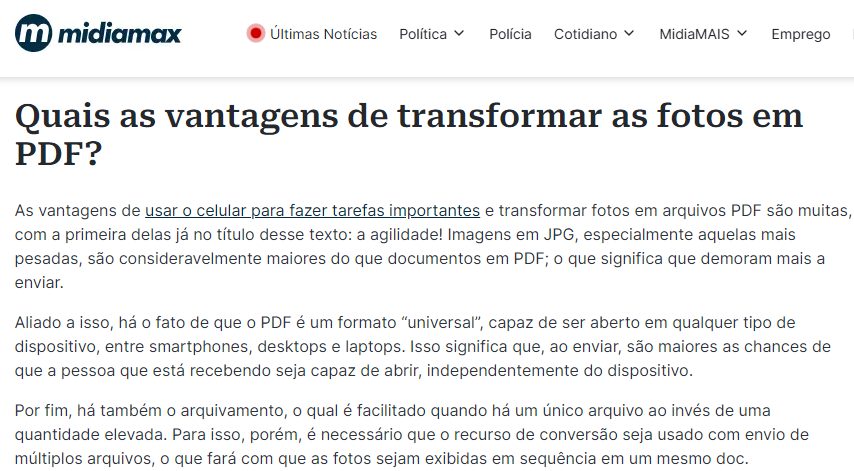
Above is an image of content created by our team for our client Smallpdf. This H2 could have been done simply, such as “Advantages.” But to meet GEO requirements, the H2 was better developed.
2. Creating text with explicit intent
AI can clearly identify topics and generate answers or lists from them. Pay attention to this example:
- Before (conventional):
“Traveling is great for relaxing. Many people choose different destinations for various reasons.”
- After (for generative interpretation):
“Common reasons for traveling include relaxation, cultural learning, family connections, and work. Each type of trip can meet different emotional and practical needs.”
3. Responding to clear search intents
This makes it easier for AI to generate a direct and precise answer based on your content.
Intent: “How to file income tax as a self-employed worker?”
Example of a structured excerpt (HTML):
<h2>How to file Income Tax as a self-employed professional?</h2>
<p>If you are a self-employed professional, you must declare your income as an individual in the section ‘Taxable Income Received from Individuals and from Abroad’.</p>
<p>In addition, you must issue receipts to your clients and keep the documents for possible audits.</p>
An example of how we work:

In the image above, you can see that our copywriters answered the question very objectively. The content was created for our client Wondershare Filmora, as part of a link building project.
4. Adding an FAQ – questions and answers
The FAQ structure is straightforward and helps generative models quickly answer similar questions asked by users. For example:
“What is car insurance?
Car insurance is a contract between the vehicle owner and the insurer, which provides coverage against damage, theft, and accidents.
What are the most common types of insurance?
- Third-party insurance
- Comprehensive insurance
- Theft and robbery insurance”
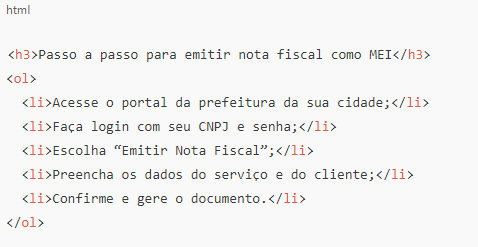
- Include tables and step-by-step instructions
List and step structures are easy for AIs to extract as direct answers. See an example for GEO:
6. Lists and rankings
Generative models can easily extract ordered lists and generate comparisons, suggestions, or summaries. See:
Main PDF editing tools in 2025:
- Smallpdf
- Adobe Acrobat
- PDFescape
- Wondershare PDFelement
- Foxit PDF Editor
7. Use short text blocks with clear sentences
Short, direct sentences are more easily “understood” by generative models. See how we do it:

8. Logical structure with headings
This structure is ideal for excerpts that can be used by AI as a snippet or summary. For example:
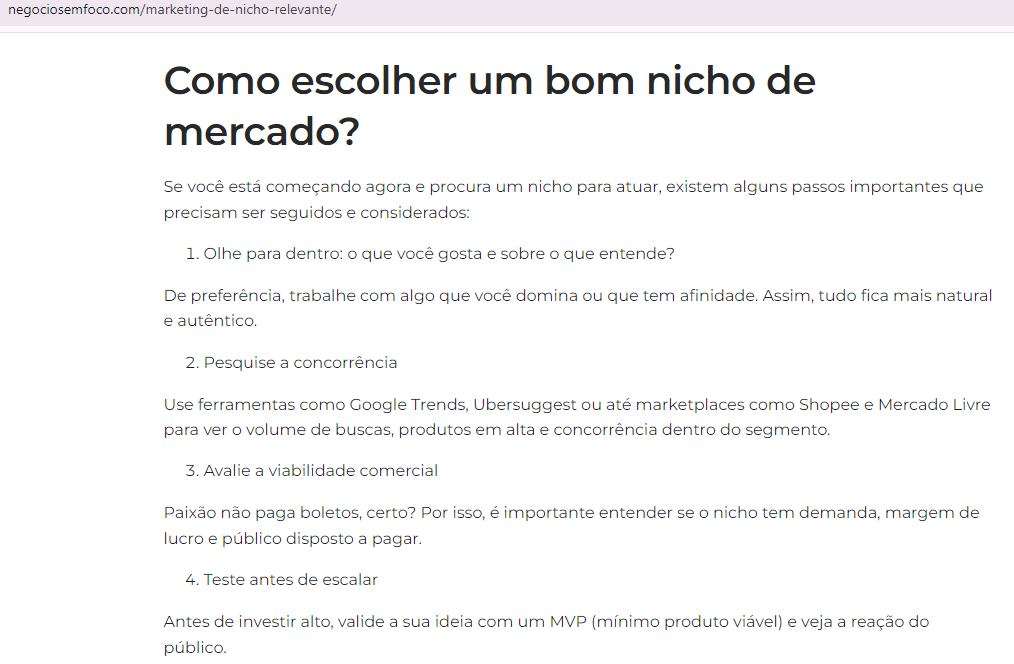
Why it works: Heading + step-by-step structure favor snippets and automated instructions. Therefore, if you want to master GEO, pay attention to this structure.
9. Use of unambiguous bullet points
AIs can easily transform this type of content into insights or automated summaries. See an example:
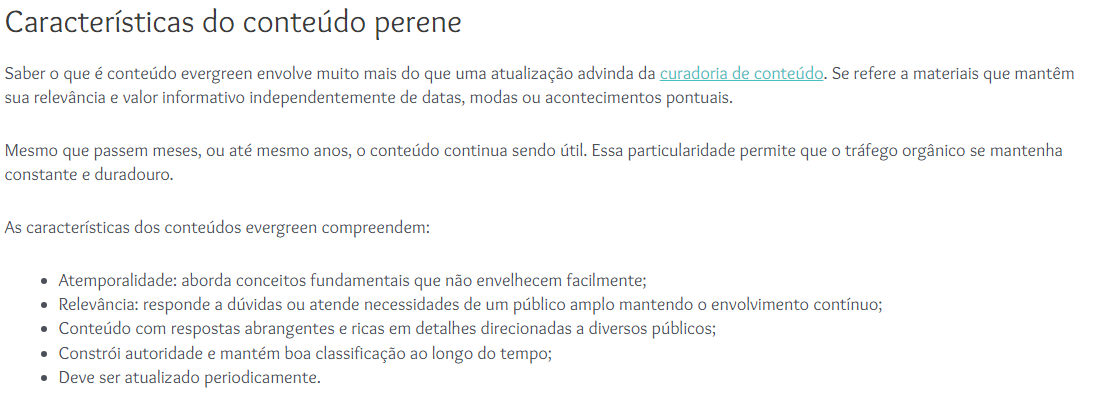
To master GEO, you only need to create content that responds with clarity and objectivity.
So, are you ready to put into practice the tips on Optimization for Generative Experiences (Generative Engine Optimization)? Remember that if needed, you can rely on the content marketing specialists at our agency. Just get in touch.